An Ode to Workers
By Lisa Zucker, NCLEJ Senior Policy Counsel
As we prepare to enjoy a restful and reflective Labor Day weekend, NCLEJ is proud to stand with workers around the country. In support of all whose labor provides the foundation of our economy, we’ve also created our 2026 Labor Day Playlist.
The first American Labor Day took place on September 5, 1882. Inspired by Canadian Labour Day, union leaders organized a powerful march in New York City marked by the presence of 10,000 workers. Walking from Union Square up to Bryant Park, these workers made their mark on history by showcasing the strength and solidarity of the American labor movement. Today, cities and towns across the country still observe the first Monday in September as a day to celebrate union workers and their tremendous (and ongoing) contributions to their families, communities, and the broader society.
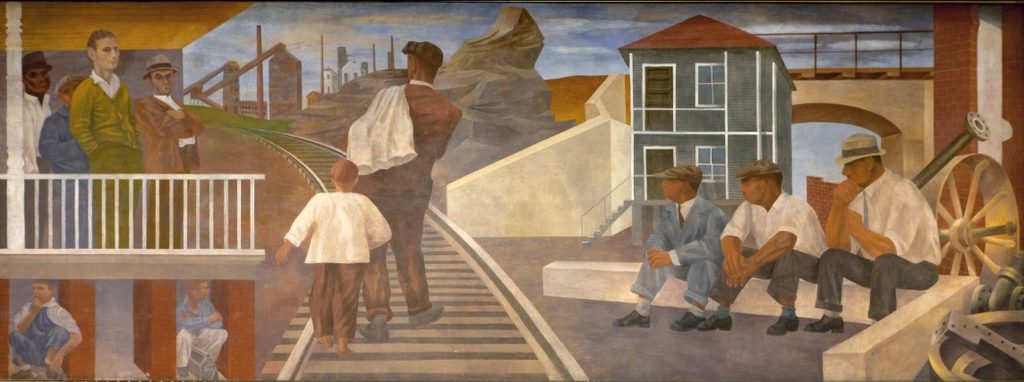
(Above, The Meaning of Social Security by Ben Shahn)
It is also important to recognize, however, that the vast majority of workers in the United States are not part of a union–some by choice, but many by design. Indeed, historical exclusions created on the basis of race still exist in federal law, denying basic labor protections to millions of low-wage workers.
As part of President Franklin Roosevelt’s New Deal legislation, the National Labor Relations Act and the Fair Labor Standards Act established important protections for American workers, including the right to a 40-hour workweek, overtime pay, and the right to organize and collectively bargain. To get southern, segregationist legislators to support the bills, however, President Roosevelt agreed that agricultural and domestic workers–primarily Black workers at the time–would be explicitly carved out of the laws. Sadly, those exclusions remain today.
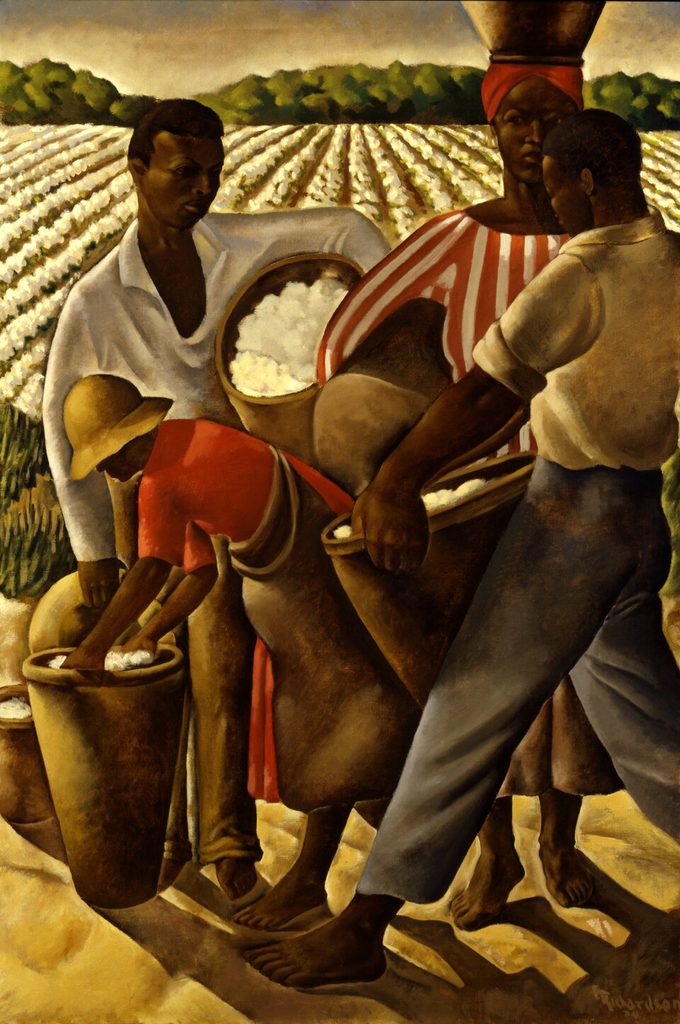
Farmworkers still labor without federally protected rights to organize, engage in collective bargaining, limit their workweek to 40 hours, and receive proper overtime pay. Live-in domestic workers lack these same protections at the federal level. And both populations are still comprised of predominantly workers of color.
(Left, Employment of Negroes by Earle Richards).
NCLEJ is working hard to rectify these inequities. To advocate for farmworkers, NCLEJ has partnered with the Coalition of Immokalee Workers to protect human rights in global supply chains through expansion of the award-winning Worker-Driven Social Responsibility (WSR) model. And to advocate for domestic homecare workers, we have been engaged in a multi-year effort to secure justice for workers who were forced to work 24-hour shifts for only 13 hours of pay. Our advocacy also includes efforts to secure fair wages and working conditions for another group of workers that aren’t just shamefully excluded from basic protections, but who are also deliberately exploited by state governments. The passage of the 13th Amendment, which ended chattel slavery, did so with an insidious exception: “as punishment for a crime.” This loophole has allowed states to build a prison labor system so dependent on human exploitation and degradation that the United Nations has called it a form of modern-day slavery. Across the nation, incarcerated people are routinely forced to work for little or no pay, under threat of severe punishment, including physical abuse, solitary confinement, and extended sentences.
NCLEJ is working with a coalition of advocates, grassroots organizers, and impacted people to pass a package of bills to end the abuse within the New York prison labor system. Bills include the No Slavery in New York Act, which would amend the New York Civil Rights Law to make clear that all forms of slavery, forced labor, and involuntary servitude, are prohibited in the state, and amend the Correction Law to expressly prohibit the use of force, threats of force, and any other threats of punishment as means to compel the labor of incarcerated people. The Prison Wage Act would provide all incarcerated workers with an hourly wage rate of one half the state minimum wage.
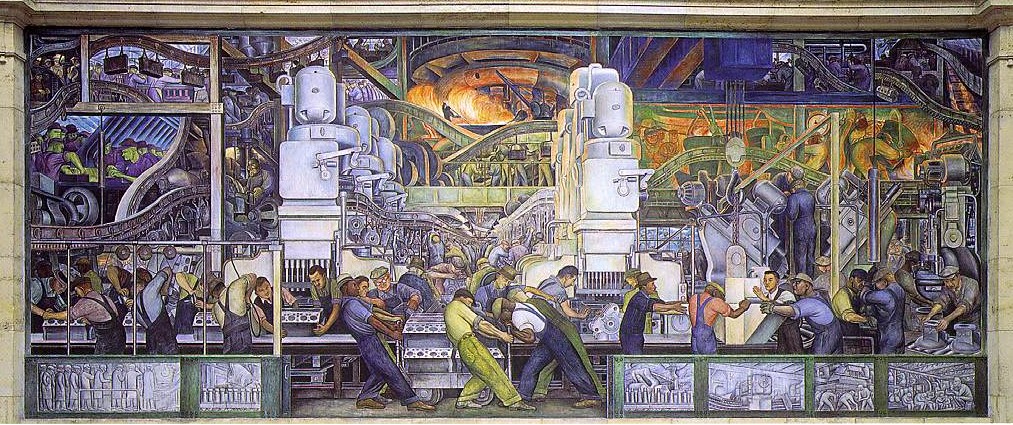
(Above, Detroit Industry Mural by Diego Rivera)
This Labor Day, let us remember these excluded workers and build a movement that protects the rights of all who labor across this country.
Recommended Media:
Music (Click here to see the full playlist).
- 9 to 5 – Dolly Parton
- Sante – Stromae
- Work – Bob Marley & the Wailers
- Worker’s Song – Dropkick Murphys
- El Jefe – Shakira, Fuerza Regida
- Ese Güey No Paga – Los Jornaleros del Norte
- Deportee – Woody Guthrie (or various other artists, including Dolly Parton)
- Solidarity Forever – Pete Seeger (or various other artists)
- Work On Natty – Culture
- We Shall Not Be Moved – Mavis Staples